

Author: Maria Deratani, Bachelor of Urban and Regional Planning student at Toronto Metropolitan University
A case described by community workers during the roundtable captured the everyday barriers newcomers face: pregnant people without OHIP are often turned away at clinics, charged fees, or redirected repeatedly before finally securing care. Grounded in these real experiences, the June 12 Soli*City session brought together researchers and community practitioners to examine the challenges undocumented and precarious-status migrants face in accessing healthcare. The discussion focused particularly on reproductive and perinatal health and explored how legal status, institutional practices, and community support structures shape access to care in Toronto and Berlin.
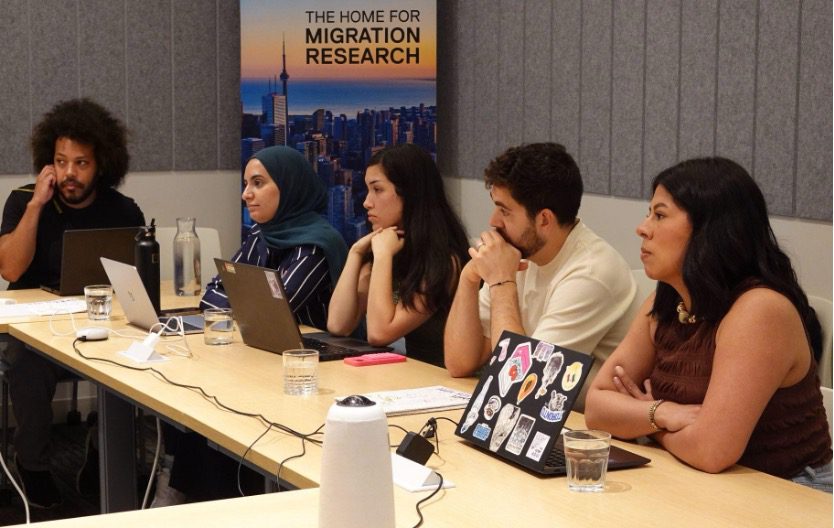
The roundtable featured presentations from researchers Dr. Stefanie Kron, Vida Carranza Capote, and Nour Al Nasser, as well as members of the Ya Estoy Aquí Healthcare Collective, a Toronto grassroots healthcare advocacy and outreach organization.
A comparative look at healthcare access in Berlin and Toronto developed through Prof. Dr. Stefanie Kron’s analysis highlighting how urban access regimes, deservingness, and institutional discrimination, shape people’s ability to obtain care. Her discussion examined how legal frameworks and institutional practices shape healthcare access in both cities. While Toronto’s AccessTO framework and publicly funded community organizations provide a more institutionalized approach than Berlin’s reliance on parallel and often precarious systems, both contexts continue to rely heavily on intermediary organizations and grassroots initiatives to bridge gaps in access. Formal rights, the presentation argued, do not necessarily translate into meaningful access, and questions of deservingness and institutional discrimination continue to influence who is able to obtain care.
Although Canada is frequently characterized as having universal healthcare, access remains conditional in practice. Participants in a study by Vida Carranza Capote described the financial, administrative, and emotional barriers associated with lacking Ontario Health Insurance Plan (OHIP) coverage, alongside the broader pressures of housing insecurity, low-wage work, food insecurity, and social isolation. Midwifery emerged as a particularly important point of access, often providing not only clinical care but also emotional support and assistance navigating institutions. At the same time, Vida’s research revealed the extent to which access frequently depends on finding the “right” advocate. Community workers, healthcare providers, and midwives often intervene to overcome barriers related to billing, referrals, and documentation, raising broader questions about why access to essential healthcare should depend so heavily on informal advocacy.
Healthcare mistrust among migrant communities in the Greater Toronto Area, analyzed in Nour Al Nasser’s presentation, was reframed not as a cultural misunderstanding but as a rational response to exclusion. She described how historical harms, institutional practices, and interpersonal experiences reinforce one another, shaping whether people believe the system will act in their interest. For precarious-status migrants, documentation requirements, language barriers, and the difficulty of navigating a fragmented healthcare system deepen the power gap and make accessing care more challenging. Nour argued that mistrust cannot be solved through more pamphlets or translation alone; it requires redesigning access points, resourcing community organizations, and separating healthcare from immigration status wherever policy allows.
Work from the Ya Estoy Aquí Healthcare Collective led by Jonathan Brooke and Paulina Hernandez Palomares illustrated how newcomers in Toronto navigate healthcare through resource development and community outreach. Founded by nurses and community members with lived experience, the collective has developed practical tools to help people without OHIP understand their options and navigate an often confusing healthcare system. Their team emphasized that while policies and programs may formally exist, access frequently breaks down in practice. Community members often encounter inconsistent information, administrative barriers, and what the collective described as “soft denial” through front desk interactions, fees, and referral systems. Their work underscored the importance of recognizing the expertise of those with lived experience and supporting the informal networks through which many migrants seek information and assistance. Their upcoming guide on pregnancy without OHIP underscores the stakes: navigating tests, referrals, hospital billing, and refusals while pregnant is not simply a bureaucratic challenge but a matter of safety and dignity.
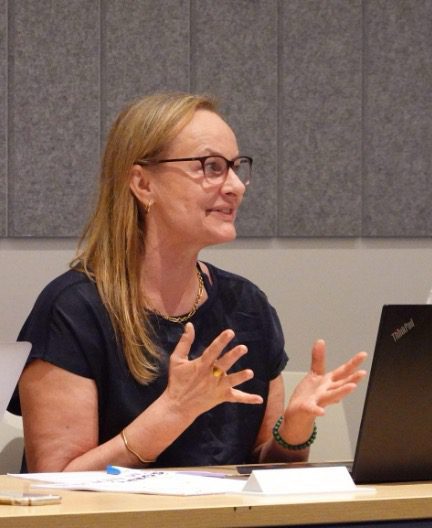
Prof. Dr. Stefanie Kron
The open discussion that followed highlighted how these questions extend beyond individual experiences and point to broader tensions within systems of care. Reflecting on the presentations, Judith Bernhard emphasized the importance of Stefanie Kron’s concept of “urban access regimes” as a way of understanding how legal frameworks, institutional practices, and advocacy networks shape healthcare access. While Toronto has gained international attention for its sanctuary policies, many of the challenges discussed reveal the gap between formal rights and lived realities. Questions of deservingness and belonging remain central, and access often depends on finding the right advocate such as a midwife, nurse, interpreter, or community worker. Resources such as Ya Estoy Aquí’s healthcare navigation guides, mapping initiatives, and collaborations among organizations serving uninsured clients demonstrate how communities are responding to gaps left by formal institutions. Yet even systems that are well can inadvertently create new barriers. Bernhard pointed to Ontario’s EarlyON centres as an example: designed as low-threshold spaces for families and young children, recent efforts to modernize registration and collect additional information may unintentionally discourage some families from accessing services. Such examples illustrate how inclusion is not simply a matter of establishing programs, but also ensuring that everyday practices do not reproduce fear, uncertainty, or exclusion.
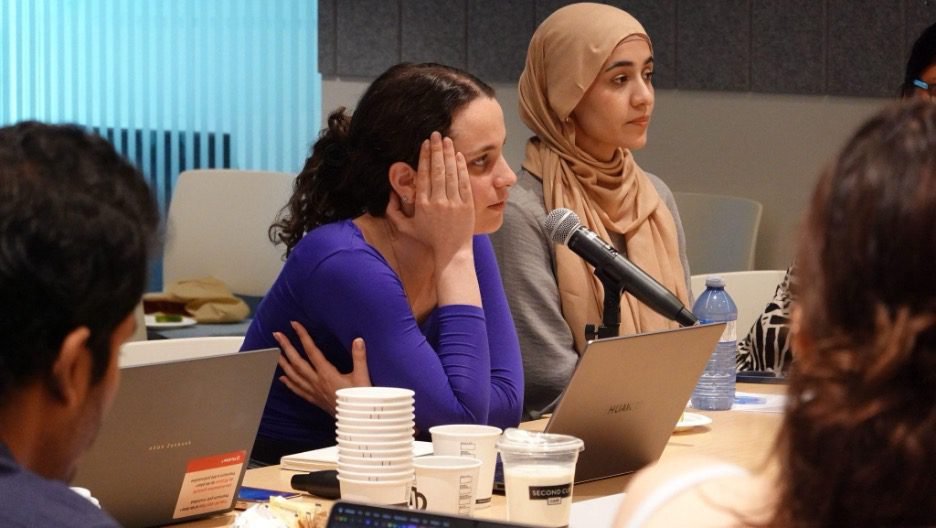
As Soli*City’s International Roundtable Series continues, these conversations offer an opportunity to connect local experiences to broader international debates and to consider how cities can move beyond symbolic commitments toward more meaningful forms of inclusion and solidarity.
You can learn more about the presentations by accessing the slides here and you can find a recording of the webinar here.
Photo credit: All photos are by Soli*City Mitacs intern, Echo Qin.
Additional Resources and Links
Slides – June 2026 Soli*City roundtable
Ya Estoy Aquí Healthcare Collective